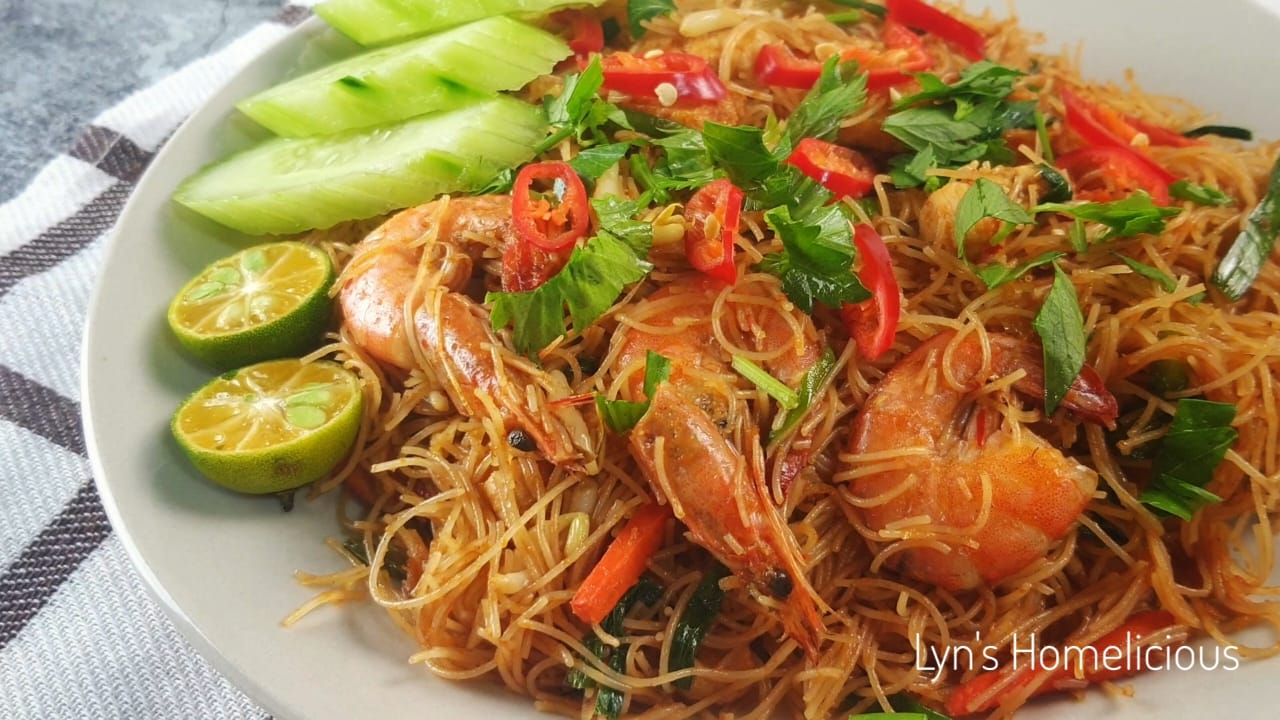
Salah satu menu sarapan pagi yang ringkas ialah bihun goreng. Sebenarnya ada beberapa versi bihun goreng yang biasa kita dengar, antaranya ialah bihun goreng kicap, bihun goreng Singapura, bihun goreng kunyit dan bihun goreng yang menggunakan cili kisar, yang biasanya mak-mak atau para isteri masak di rumah tu.
Bahan kisar untuk membuat bihun goreng ini, selain menggunakan bawang merah, bawang putih dan cili kisar, saya juga menambah sedikit udang kering yang telah direndam terlebih dahulu. Untuk menambah rasa, saya tambah seketul kiub pati ikan bilis.
Tonton Video Tutorial di Sini :
Selain menggunakan isi ayam dan udang, anda boleh menggunakan rencah lain seperti sotong dan daging yang telah direbus sehingga empuk terlebih dahulu. Untuk menambah serat dan membuatkan warna bihun goreng lebih cantik dan meriah, tambahkan hirisan sayur-sayuran seperti sawi, daun kucai ,lobak merah dan taugeh.
Bihun goreng tidak muak rasanya walaupun dinikmati setelah ia sejuk. Maka, bihun goreng juga sesuai dijadikan hidangan ringkas untuk jamuan dan para tetamu yang bertandang ke rumah.
Selamat mencuba!
Bihun Goreng Simple
Kategori : Resepi Mee
Masa Penyediaan : 10 minit
Masa Memasak : 15 minit
Saiz Hidangan : 6-7 orang
BAHAN-BAHAN :
Bahan Kisar :
1 biji bawang besar (55-60 gm)
5 ulas bawang merah (90-100 gm)
3 ulas bawang putih (20 gm)
1 sudu besar penuh udang kering (13 gm) - rendam 5 minit
Air secukupnya
Bahan Lain :
1/3 cawan minyak masak
200 gm dada ayam (potong kecil)
15-20 ekor udang bersaiz M
2 ulas bawang putih (ketuk)
4 sudu besar cili kisar (55 gm)
1-2 ke 3/4 cawan air
1 ketul kiub pati ikan bilis
2.5 sudu besar sos cili (60 gm)
2 sudu besar sos tomato (40 gm)
1 sudu besar sos tiram (18 gm)
3 sudu besar kicap pekat manis (35 gm)
1 sudu besar sos sotong/sos ikan (9 gm)
Garam secukupnya
1/2 batang lobak merah (hiris memanjang)
2-3 pokok sawi (asingkan daun dengan dahannya)
1 peket bihun (350 gm) - rendam sehingga lembut
3 keping kek ikan (hiris nipis)
2-3 genggam taugeh
8-9 tangkai daun kucai (potong sepanjang 2-3 cm)
CARA MEMBUAT :
Kisar halus bahan kisar.
Panaskan minyak di dalam kuali. Setelah minyak cukup panas, goreng isi ayam sehingga bertukar warna. Angkat dan ketepikan. Kemudian goreng pula udang sehingga bertukar warna. Angkat dan ketepikan.
Masukkan bawang putih yang diketuk, tumis sebentar sehingga naik bau, kemudian masukkan bahan kisar dan tumis sehingga hampir garing.
Masukkan cili kisar dan tumis sehingga pecah minyak dan garing.
Masukkan air dan kiub pati ikan bilis. Kacau sebati dan biarkan kuah mendidih.
Masukkan sos cili, sos tiram, sos tomato, kicap manis dan kicap sotong/ikan dan kacau sebati.
Masukkan batang sawi dan hirisan lobak merah, masak 2 ke 3 minit, sehingga sayuran agak lembut.
Masukkan garam dan kacau sebati.
Masukkan bihun yang telah direndam dan gaul sebati.
Setelah bihun tidak lagi berwarna jernih dan agak lembut, masukkan daun sawi dan hirisan kek ikan. Gaul sebati.
Masukkan ketulan ayam dan udang yang sudah digoreng dahulu, taugeh dan daun kucai. Gaul sebati dan boleh padamkan api.
Hidangkan sementara masih panas, bersama hirisan timun dan limau sambal jika suka.
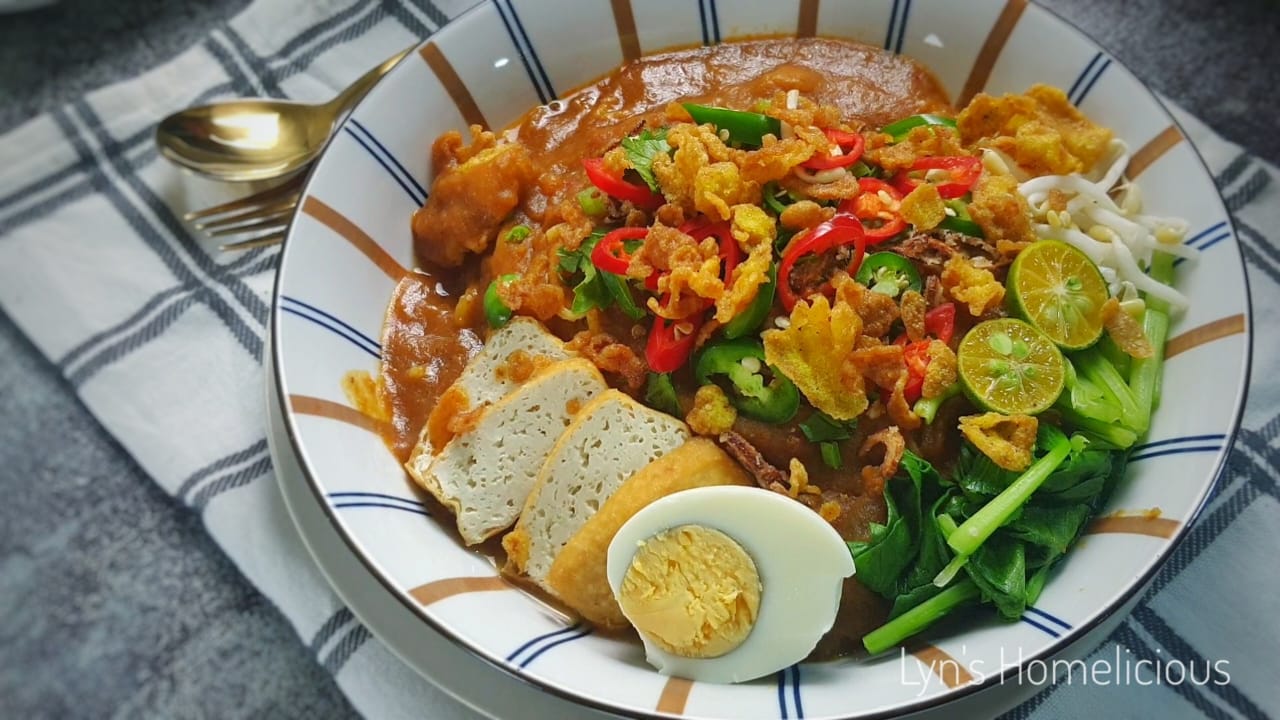
Mee rebus, salah satu menu signature yang popular terutamanya di negeri Johor selain soto, kacang pool dan mee bandung. Mee rebus mempunyai rasa yang unik, dan kuahnya diperbuat dari stok daging, udang kering, bawang, halia, rempah kari dan keledek oren yang direbus dan dikisar halus. Kuah mee rebus ini tidak pedas, atau pedas sedikti saja dan rasanya agak manis dan pekat.
Salah satu bahan rahsia yang membuatkan kuah mee rebus ini semakin sedap ialah dengan menambah taucu manis. Taucu manis akan melengkapkan rasa kuah mee rebus. Resepi mee rebus ini ialah resepi mee rebus asli Johor, tanpa menggunakan sos tomato atau bahan perasa lain seperti kacang tanah dan sebagainya.
Tonton Video Tutorial di Sini :
Untuk menyediakan kuah mee rebus, mula-mula kita perlu sediakan stok dagingnya terlebih dahulu. Stok daging ini boleh disediakan dengan cara merebus daging lembu yang telah dipotong menjadi ketulan lebih kecil bersama sedikit garam dan hirisan halia sehingga daging lembut. Masa merebus daging ini bergantung kepada kualiti daging yang digunakan ya, kalau pakai daging Allana tu perlu lebihkan waktu merebus daging supaya daging tidak liat dan lembut saja ketika dinikmati.
Komponen mee rebus ini terdiri daripada :
Kuah mee rebus
Mee kuning yang telah dicelur
Cucur rangup
Bawang goreng
Telur rebus dibelah dua
Tauhu goreng yang digoreng dan dihiris nipis
Hirisan cili merah & hijau
Taugeh yang telah dicelur
Hirisan daun sup dan daun bawang
Limau kasturi
Sayuran yang telah dicelur seperti sawi dan lobak merah jika suka
Cara Penyimpanan Kuah Mee Rebus :
Kuah mee rebus boleh disediakan terlebih dahulu, dan boleh disimpan di dalam freezer. Masukkan kuah mee rebus ke dalam bekas bertutup, agak-agak untuk sekali hidangan setiap bekas dan simpan di dalam freezer.
Untuk memanaskan kuah mee rebus, boleh keluarkan kuah dan biarkan di ruangan chiller semalaman supaya kuah perlahan mencair, atau keluarkan dari freezer dan biarkan pada suhu bilik selama 3 ke 4 jam. Setelah cair, panaskan semula di atas dapur seperti biasa.
Mee rebus ini merupakan menu versatile yang bukan sahaja sesuai dinikmati sebagai juadah untuk minum petang, anda boleh siapkan mee rebus sebagai sajian sarapan pagi, atau untuk jamuan. Bagi anda yang suka masakan berasaskan mee seperti mee rebus, bolehlah cuba membuatnya sendiri di rumah.
Selamat mencuba!
Mee Rebus Asli Johor
Kategori : Resepi Mee
Masa Penyediaan : 1 jam
Masa Memasak : 50 minit
Jumlah Hidangan : 15-18 orang
BAHAN-BAHAN
Kuah Mee Rebus :
Stok Daging :
2500 ml air
500 gm daging lembu- potong menjadi ketulan bersaiz medium
1 inci halia
1 sudu teh penuh garam
Bahan Kisar :
2 biji bawang besar (155-160 gm)
8 ulas bawang merah (125-130 gm)
7 gm ulas bawang putih (35-40 gm)
2 inci halia (20 gm)
1/2 cawan udang kering (65 gm) - rendam sehingga lembut
1 sudu besar penuh udang kering (13 gm) - rendam & tumbuk halus
1/2 sudu teh garam
1/4 sudu teh serbuk kunyit
Anggaran 175 ml air (2/3 cawan + 1 sudu besar)
Bawang Goreng :
8 ulas bawang merah (hiris nipis) (135-140 gm)
2 ulas bawang putih (hiris nipis) (7-10 gm)
1 sudu teh gula pasir
1/2 sudu teh garam
2-3 sudu besar tepung jagung
Bahan Sampingan :
Mee kuning (celur) - 2 kg
Tauhu goreng (hiris nipis)
Telur rebus (belah 2)
Hirisan cili merah & hijau
Taugeh (celur)
Sawi (celur)
Hirisan daun sup & daun bawang
Limau sambal/kasturi
CARA MEMBUAT
Kuah Mee Rebus :
Didihkan air di dalam periuk, kemudian masukkan ketulan daging, hirisan halia dan garam. Kacau sebati, tutup periuk dan reneh dengan api sederhana selama 20 minit, atau sehingga daging empuk.
Sementara itu, siapkan bahan kisar. Kisar halus bawang besar yang telah dihiris kasar, bawang merah, bawang putih ,halia, udang kering yang telah direndam dan air secukupnya.
Siapkan pes kari dengan mencampur sebati antara serbuk kari dengan air. Ketepikan.
Kisar halus keledek oren bersama taucu manis dan air secukupnya. Ketepikan.
Selepas 20 minit, atau setelah daging empuk, keluarkan daging dan hiris nipis. Ketepikan.
Panaskan minyak masak di dalam periuk. setelah panas, tumis serai dan lengkuas yang telah diketuk sehingga harum.
Masukkan bahan kisar dan tumis sehingga airnya susut sedikit.
Masukkan pes cili kering dan tumis sehingga rempah garing.
Masukkan pes kari dan tumis lagi sehingga garing dan pecah minyak.
Masukkan pes keledek, stok daging dan air. Didihkan kuah.
Masukkan hirisan daging rebus, gula, garam dan asam gelugor.
Reneh sebentar supaya sebati, kemudian padamkan api.
Keluarkan asam gelugor supaya kuah tidak terlalu masam.
Cucur Rangup :
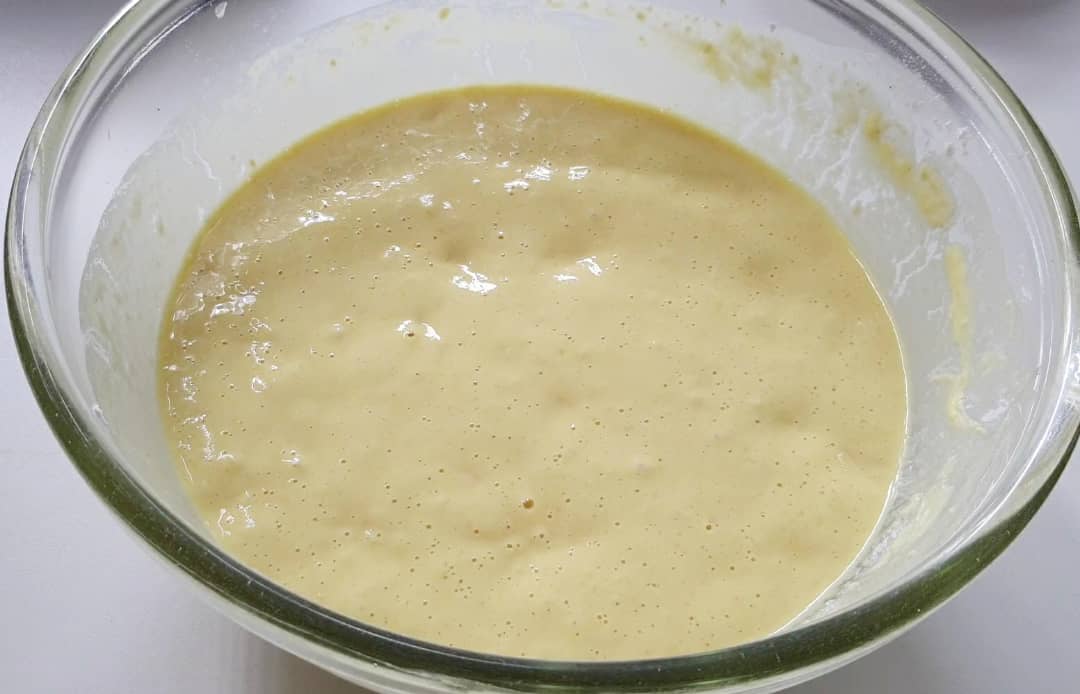
Di dalam sebuah mangkuk, campur bersama tepung gandum, tepung beras, tepung jagung, udang kering yang direndam dan ditumbuk halus, serbuk kunyit dan garam.
Tuang air secara bertahap sehingga adunan tidak berketul. Kepekatan adunan lebih cair dari adunan untuk pisang goreng ya.
Panaskan minyak untuk menggoreng di dalam kuali.
Setelah minyak cukup panas, renjis-renjiskan adunan cucur menggunakan hujung sudu. Jangan letak terlalu banyak supaya cucur tidak melekat antara satu sama lain.
Goreng dengan api sederhana sehingga cucur menjadi garing dan rangup.
Setelah masak, angkat dan toskan.
Simpan dalam bekas kedap udara setelah sejuk.
Bawang Goreng :
Gaul bersama hirisan bawang merah dan bawang putih bersama gula, garam dan tepung jagung.
Panaskan minyak untuk menggoreng di dalam kuali.
Setelah minyak panas, goreng bawang dengan api sederhana sehingga berwarna kecoklatan. Kacau selalu supaya bawang masak dengan sekata dan tidak hangus.
Setelah garing, angkat dan toskan.
Setelah sejuk, simpan dalam bekas kedap udara.
CARA MENGHIDANG MEE REBUS :
Letakkan mee kuning yang telah dicelur di dalam pinggan/ mangkuk penghidang.
Tuang kuah mee rebus sehingga menutupi mee.
Hias dengan hirisan tauhu goreng, telur rebus yang dibelah dua, limau sambal dan sayuran yang dicelur.
Tabur hirisan daun sup dan daun bawang, bawang goreng, hirisan cili merah dan hijau.
Olio Aglio spaghetti, a type of fried spaghetti with a hint of spiciness from the chili flakes and black pepper with fragrant herbs aroma from fresh parsley and chopped garlic.
The spaghetti is usually cooked with seafoods and shellfish such as prawn and Malaysian clam, or called lala locally.
This spaghetti is light in flavors and no gravy like the other two types of spaghetti - Carbonara and Bolognese.
In this post, I'm going to share with you my version of Olio Aglio spaghetti, with Malaysian flavors.
Instead of adding chopped fresh parsley into the spaghetti, I used fresh curry leaves.
We seldom stock seafoods at our home, since we prefer chicken more.
So, in this recipe I used chicken meatballs with sausages.
You can make your homemade chicken meatballs if you have a food processor at home.
Chicken meatballs are easy to be made, and the best part is, you can season your meatballs with the seasonings of your choice!
I've shared my homemade chicken meatballs previously, to be cooked in thick curry.
I used readymade chicken meatballs for this recipe as I had ran out of chicken breasts at home.
To enrich the flavor of the spaghetti, I used chicken stock powder.
You can also use anchovies or beef stock powder if you like.
I love to add some colors to my Olio Aglio spaghetti, so, I added green and yellow capsicums.
Other than capsicums or bell peppers, you can use broccoli, cauliflower, corn, carrot, peas and mushrooms.
You can use almost any kind of mushroom into your spaghetti, but not Shitake mushroom!
It's stinky flavor will ruin the authentic flavor of the spaghetti.
Watch my video to get step-by-step tutorial on how to make the olio aglio spaghetti here:
Olio Aglio spaghetti is usually cooked with olive oil.
If you're unfamiliar with olive oil, it basically has two types - extra virgin and regular (light or pure) olive oil.
The extra virgin olive oil is the unrefined oil that retained the true flavors of olive and has more minerals and vitamins.
It also has darker color compared to the regular olive oil.
This is the healthiest olive oil that you can find in the market, however, it is said to have lower smoke point, which means, you can't cook under high temperature if you're using extra virgin olive oil as it will burn quickly.
The second type of olive oil, which is the cheaper version - the regular olive oil is the refined version of olive oil.
Is has neutral flavor with lighter color.
It has less antioxidant and anti inflammatory agents due to less vitamins and minerals it contained compared to the extra virgin olive oil.
However, this type of olive oil has higher smoke point, making it possible to be use for any kind of cooking, like the other types of vegetable oil.
So, when the recipe calls for using olive oil, which type of olive oil do you normally use?
For me, you don't have to bother so much since it can be substituted for each other, just keep in mind of their differing smoke points and the flavors might be little different since the extra virgin one has natural sweetness and bitterness of the olive.
I love the flavor of the extra virgin olive oil, however, in this recipe, I used regular olive oil to make the flavor of my spaghetti more natural.
So, if you're ready, let's have a look on my easy version of chicken meatball Olio Aglio spaghetti.
Happy cooking!
Chicken Meatball Olio Aglio Spaghetti With Malaysian Flavors
Category : Western, Resepi Mee
Preparation Time : 5 minutes
Cooking Time : 25 minutes
Serving Size : 7 to 8 people
INGEDIENTS
1 packet of spaghetti
5 sausages - cut into bite size pieces
15 pieces of chicken meatballs
8 cloves of garlic - chopped
8 pieces of dried red chilies - cut into 2 cm pieces
2 stalks of curry leaves
1/2 green capsicum - thinly sliced
1/2 yellow bell pepper - thinly sliced
1 tablespoon of chicken stock powder / 1 cube of chicken stock * can use anchovies/beef stock powder/cube
1 tablespoon of chili flakes *or more if you like spicy
Coarse black pepper powder as needed
Salt to taste
4 tablespoons of olive oil
Water as needed to boil spaghetti
1 tablespoon of olive oil to boil spaghetti
1 teaspoon of salt to boil spaghetti
INSTRUCTIONS
Bring water to boil in a large wok/pot. Once boiled, add 1 teaspoon of salt and a tablespoon of olive oil. Add in a packet of spaghetti.
Stir and simmer for about 8 to 10 minutes, until spaghetti is tender and chewy. Then, drain the water.
Heat 4 tablespoons of olive oil in a wok. Once hot, fry sausage pieces and chicken meatballs until light brown. Remove and set aside.
Using the same oil, add in chopped garlic and stir fry for about 1 minutes, until fragrant.
Add in dried red chili pieces and curry leaves and stir fry until garlic are brownish over medium heat.
Add in sliced bell pepper and capsicum and give it a quick stir.
Then, add in chicken/anchovies/beef stock powder/cube and stir until well combined.
Add in the spaghetti, followed by chili flakes, coarse black pepper powder and fried sausages and chicken meatballs. Stir and fry for a few minutes.
Lastly, season with salt. Give it a quick stir just to distribute salt evenly then turn off the heat.
If I have to choose between Rojak Petis and Rojak Mee, I will definitely choose Rojak Mee.
Rojak Mee is consider as one of the Malaysian salad which consists of shredded turnip, cucumber, cucur udang (prawn fritters), fried tofu, fried bean curd (tempeh), fried potatoes, hard boiled eggs and blanched yellow noodles (mee kuning), eaten with sweet and spicy nut sauce or called as kuah kacang in Malay.
The deliciousness of rojak mee actually lies in the taste of the nut sauce, which is made of dried red chilies, peanut, onion, garlic, shallot, dried shrimp or dried squid, sugar and salt.
You can use orange sweet potatoes, boiled and blend until smooth or finely ground Marie biscuits to thickens the nut sauce.
Some of the nut sauce recipes called for the usage of palm sugar or Gula Melaka to make the nut sauce.
I love the flavors of palm sugar in my nut sauce, but I prefer to add two types of sugars - palm sugar and dark brown sugar (gula merah) when I make the nut sauce.
Dark brown sugar contains more molasses which will makes your nut gravy dark in color with richer caramel flavor.
I like my nut sauce to be darker in color in order to distinguish between nut sauce that is eaten with compressed rice and the nut sauce for Rojak Mee.
Watch my video for step-by-step tutorial on how to make Rojak Mee here:
To make Rojak Mee at home, to be honest, there is a lot of preparation that you need to do.
For me, I prefer to make the prawn fritters first, followed by preparing the fried tempeh and fried tofu.
Meanwhile, you can start boiling the eggs and blanch the yellow noodles.
You'll have to boil the potatoes until you can easily poke the potatoes with a bamboo skewer or a fork, then cut them in half before deep frying until golden brown.
I will make the nut sauce after I finished preparing Rojak Mee's "accessories" because I want the nut sauce to be hot when I serve.
The nut sauce will be more delicious after it is reheated because all the flavors from the ingredients to make the nut sauce will mingle together, forming new molecules to make the nut sauce more flavorful.
Each time when I make nut sauce, I'll make sure to prepare extra portions to be eaten with stuffed tofu (tahu sumbat) or onion fritters (cucur bawang).
You can freeze the nut sauce, and it can stays up to a few months if frozen.
I love to use onion and Holland onion to make my nut sauce.
Holland onion is sweeter with more delicate in flavor compared to the onion, which has a sharp and more pungent flavor.
Some of the nut sauce recipes called for adding shallots, you may add 1 or 2 shallots for this recipe if you like, but I prefer to use onion only.
Let's get the recipe of Rojak Mee.
ROJAK MEE / ROJAK MAMAK
Category : Resepi Mee, Indian Cuisine
Serving Size: 10 - 12 people
Preparation Time : 35 minutes
Cooking Time : 40 minutes
INGREDIENTS
Prawn Fritters (Cucur Udang) :
2 cups of all purpose flour
1 teaspoon of instant dry yeast
1 medium sized egg
1 tablespoon of dried shrimp (soaked for 5 minutes and finely chopped)
1/2 teaspoon of salt
1/4 teaspoon of turmeric powder
Approximately 1 & 1/2 cups of water
1/2 onion - diced
3 plants of chive - cut into 2 cm pieces
A handful of bean sprouts
13 to 15 medium sized prawns
Oil for frying
Nut Sauce:
1 cup of peanut
6 pieces of Maries biscuits
1 small block of palm sugar (gula Melaka)
6 tablespoons of dark brown sugar (gula merah)
1 liter of water
500 ml of water (to blend ingredients)
1 inch of ginger* - coarsely sliced
1 onion*- coarsely sliced
1 Holland onion*- coarsely sliced
4 cloves of garlic*- coarsely sliced
20 pieces of dried red chilies* - cut in half and remove some of the seeds
2 tablespoons of dried shrimps* - soaked for 10 minutes
Cooking oil as needed for frying spices ingredients
Other Ingredients:
2 blocks of soybean cake (tempeh)
4 blocks of hard tofu
5 eggs
2 to 3 potatoes
Julienned/Shredded cucumber
Julienned/shredded turnip
Chopped salad
500 grams of yellow noodles
INSTRUCTIONS
Prawn fritters (cucur udang):
In a mixing bowl, combine flour, salt, chopped dried shrimps, turmeric powder and dry yeasts. Stir the mixture with a whisk or a wooden spatula until combined.
Add 1/3 of water to the dry mixture, and whisk until mixture forms a thick paste. Then add in another 1/3 of water and continue whisking until a thick batter is formed. lastly, add in the remaining water and whisk until the batter is smooth.
Crack in an egg into the batter and whisk until fully combined.
Cover the bowl with with a clean towel or cling wrap and let it sit at warm place for 30 minutes, until you can see bubbles are forming.
After 30 minutes, preheat oil for deep frying in a frying pan or a pot over medium heat.
Add in diced onion, bean sprouts and chive pieces into the batter and mix gently with a spatula, or a spoon until just combined. Do not overmix to prevent the batter from deflating.
When the oil is hot, dip a stainless steel/ metal ladle in the hot oil for a few seconds to preheat the ladle before using. Spoon some of the batter onto the hot ladle and top with one prawn. Submerge the ladle into the hot oil for a few seconds for deep frying. Once you see the surface of the prawn fritter is firm, gently shake the ladle to detach the fritter from the ladle. You may have to push the fritter with a tong or a heat proof spatula to help loosen the fritter from the ladle. Deep fry for 1 to 2 minutes, until golden brown on all sides.
While waiting for the first fritter to set, you can start making for the next fritters. Do not overcrowd the pan/pot as to ensure fritters are even fried on all sides.
Place fried prawn fritters in a colander or paper towels to drain excess oil.
Once the fritters are cool, cut each fritter into 4 with a knife. Place the fritters in a container.
Other Ingredients:
Fried soy bean cakes, fried tofu & fried potatoes
Deep fry tofu block and soybean cake until golden brown on all sides, then, place the fried tofu and soybean cake in a colander or on a paper towels to drain excess oil. Once the fried tofu and soybean cake are cool, cut into 6 to 12 pieces each. Place fried tofu and soybean cake pieces in a container.
Bring water to boil over medium heat. Use a ladle to put in the eggs into the boiling water to prevent cracking. In the same pot, add in cleanly wash (with skin on) potatoes. Boil eggs and potatoes until potatoes are tender over medium heat.
Place boiled eggs into cold water to easily peel the eggs. Peel off the skin and cut the eggs in half.
Allow the boiled potatoes to turn warm before peeling off the skin and cutting them in half. Deep fry the potatoes until golden brown. Cut the fried potatoes into 6 pieces each and place in a container.
Bring a pot of water to boil. Add in a pinch of salt and yellow noodles. Cook briefly until tender and then drain the water.
Nut Sauce:
Roast peanuts in a pan over medium heat, until the dark brown spots start to appear on the peanut skin. Finely grind the roasted peanut with a dry blender.
Heat about 1/4 cup of oil in a pan. Once oil is hot, fry garlic, Holland onion, onion, ginger and soaked dry shrimps until onions are translucent. Transfer the ingredients into a blender.
Using the same oil (you may need to add about 3 tablespoons of cooking oil), fry dry red chilies over medium-low heat until the chilies are crispy and turn darker. Be careful not to burn the chilies. Transfer fried dry red chilies in the blender.
Pour 500 ml of water into the blender and blend the fried spices until smooth.
Finely grind the Marie biscuits in a dry blender.
Bring 1 liter of water to boil in a pot. Add in blended spices, ground peanut, palm sugar, dark brown sugar and ground Marie biscuits. Simmer over medium heat until the sauce is slightly thickened or reaching your desired consistency. Stir occasionally to prevent crust from forming at the bottom of the pot.
Season the nut sauce with salt. Give it a quick stir and then turn off the heat.
How To Serve Rojak Mee:
Take a small amount of yellow noodles and place on a serving plate. Add a handful of prawn fritters pieces (make sure your glove is on) followed by a few pieces of fried tofu and soybean cake. Top with a small handful of julienned/shredded turnip and cucumber. Add halved hard-boiled egg.
Curry noodles is a popular dish.
It is a signature dish especially among Malaysian, Indonesian and Singaporean.
Japanese has their famous udon curry, which taste slightly different, mild and sweeter.
Here in Malaysia we have a few variations of curry noodles, or mee kari - we have cockles curry noodles (mee kari kerang), seafood curry noodles - with shrimps and squids, beef, chicken and fish curry noodles.
The curry noodles have similar method in the preparation of the gravy, but the taste will vary according to whether you are using chicken, beef, fish, cockles or seafood.
AND...the best thing is, there's no fix rules in making curry noodles, and you're free to mix and match the meat options to suit your preferences.
Since seafood is not regular at our home, usually my version of curry noodles use chicken as the main ingredient.
Chicken is a versatile seasoning, and it is suitable for almost with any kind of dishes, so..chicken is a must have ingredient available in my freezer.
I have googled curry noodles recipes - some of the recipes are using empat sekawan (cinnamons, star anises, cardamoms and cloves) while some of the Nyonya's versions of curry noodles has fish and soy sauce added into it.
For me, what makes the gravy of curry noodles special and different with the regular curry that we prepared to be paired with bread and rice is the usage of lemongrass and galangal.
While adding lemongrass and galangal added more flavor in regular curry, however, there two ingredients are not necessarily be added since regular curry is already scrumptiously flavored with curry paste, onion, ginger, garlic, coconut milk, curry leaves, and not forgetting - the empat sekawan.
So, if you're a fan of curry, it's worth to try and experimenting to make the best curry noodles gravy that suits your taste.
I learned to cook local dishes such as curry noodles, mee rebus (a noodles dish with sweet potato gravy), laksa Johor and the popular mee bandung Muar from my mum.
She is expert in preparing these dishes especially when she was young.
Half of my cooking skills I got it from my mum.
I made curry noodles yesterday, and usually, I 'll cook in a larger portions to be eaten until the next day.
Some dishes, like rendang, curry, asam pedas and laksa gravy - they taste better the next day after reheated.
The proteins in meat are be broken down into smaller molecules will enhance the flavor of the dish and the spices from onion, garlic, ginger and curry powder will make the dishes more savory and well-rounded with flavors when reheated.
Another ingredients you need to consider adding to your curry noodles are fish balls, fish cakes and tofu puff.
Every time when I decided to cook curry noodles, I will make sure I have these three ingredients at home.
It's not a necessity, but adding fish balls, fish cakes and tofu puff will really makes a difference.
It's like the make up of the dish that will make your curry noodles more appetizing and flavorful.
If you're using shrimps to make the noodle's gravy, you can use the the head and the shrimp's shells to prepare the shrimp broth (or stock).
My easiest way to make plain shrimp broth is to cook the shells with water and when the mixture is boiled, lower the heat and allow it to simmer for another few minutes.
Strain the mixture to remove the shells into a clean container.
It can lasts up to 3 days when refrigerated.
Alternatively, you can also prepare beef stock by simmering the bones (with some scraps of meat attached to the bones) to extract its flavor.
Additional onion, garlic, celery and carrot may also be added to prepare the both the shrimp and beef stock.
To remain its authenticity, I used yellow noodles, parboiled until tender (not mushy) and strained to remove excess the water to be eaten with the noodle's gravy.
I know yellow noodles may cause stomach boating and cramp to some people as it does contains lye water for alkalisation of the noodles that gives its chewy texture and yellowish color.
I sometimes develop these symptoms since I have a sensitive stomach.
So, the other options you can enjoy your curry noodles are to substitute the yellow noodles with bee hoon (rice vermicelli), kuew teow (flat rice noodles) or egg noodles.
MEE KARI KERANG
(MALAYSIAN CURRY NOODLES)
Cuisine : Malaysia, Nyonya, Singapore, Indonesia
Serve : 7-8
Ingredients for making the noodle's gravy (*not in picture : tofu puff)
Ingredients:
1/3 chicken - cut into small parts
1 cup of cooked, unshelled cockles - optional
1 lemongrass - bruised
4cm of galangal - bruised
150 ml or 3/4 cup of coconut cream
1 1/5 liter of water
5 tablespoons of meat curry powder (mix with 1/3 cup of water to make curry paste)
3 tablespoons of chili paste - optional
1 cube of chicken stock or 1 tablespoon of chicken stock powder - optional
1 small packet of fish balls (I used 10 large fish balls)
1 small packet of fried fish balls - optional
2 sticks (or more) of fish cakes
1 small packet of tofu puff - cut into 4
Approximately 5 tablespoons or 1/4 cup of cooking oil
Salt to taste
Sugar to taste
Ingredients (to blend):
6 shallots (or more if you're using the smaller size)
1 onion
4 cloves of garlic
1 inch of ginger
Garnish:
1 to 2 packets of 500 grams of yellow noodles
Fried hard tofu - sliced
Hard-boiled eggs
Chinese celery - chopped
Fried shallot
Spicy chili paste
Methods:
Heat oil in a large pot over medium heat. Stir fry the blended mixture and chili paste until fragrant. Then, add in curry paste and cook until the oil separates and the mixture turned dark orange.
Pour in water, add chicken parts, bruised lemongrass and galangal, chicken stock cube/powder and season with sugar and salt. Bring the mixture to boil.
Add in fish balls, fish cakes, fried fish balls, tofu puff and cockles (if using). Remove the fish balls, fish cakes and fried fish balls with a tong once they float on the gravy's surface.
Pour in the coconut cream, lower the heat and allow it to simmer until the gravy is slightly thickened.
In another pot, bring water to boil over medium heat. Add a teaspoon of salt and add noodles. Stir noodles from the bottom from time to time and cook until barely done. Take note not to cook the noodles until mushy. Drain parboiled noodles in a colander and rinse at once under running water to remove excess starch. Place the noodles in a large container or plate and set aside until needed.
To Prepare The Spicy Chili Paste
Ingredients:
10 tablespoons (or more) of chili paste
Salt to taste
Sugar to taste
Cooking oil
Instructions:
Heat oil in a pan or saucepan, fry chili paste, add sugar and salt and cook until the oil is separating and the mixture turned dark red.
To Assemble Curry Noodles:
Place a portion of parboiled noodles in a serving bowl, pour in the gravy and garnish with sliced fried tofu, sliced fish cakes, fish balls, hard-boiled egg cut into half and sprinkle with chopped Chinese celery and fried shallot.